
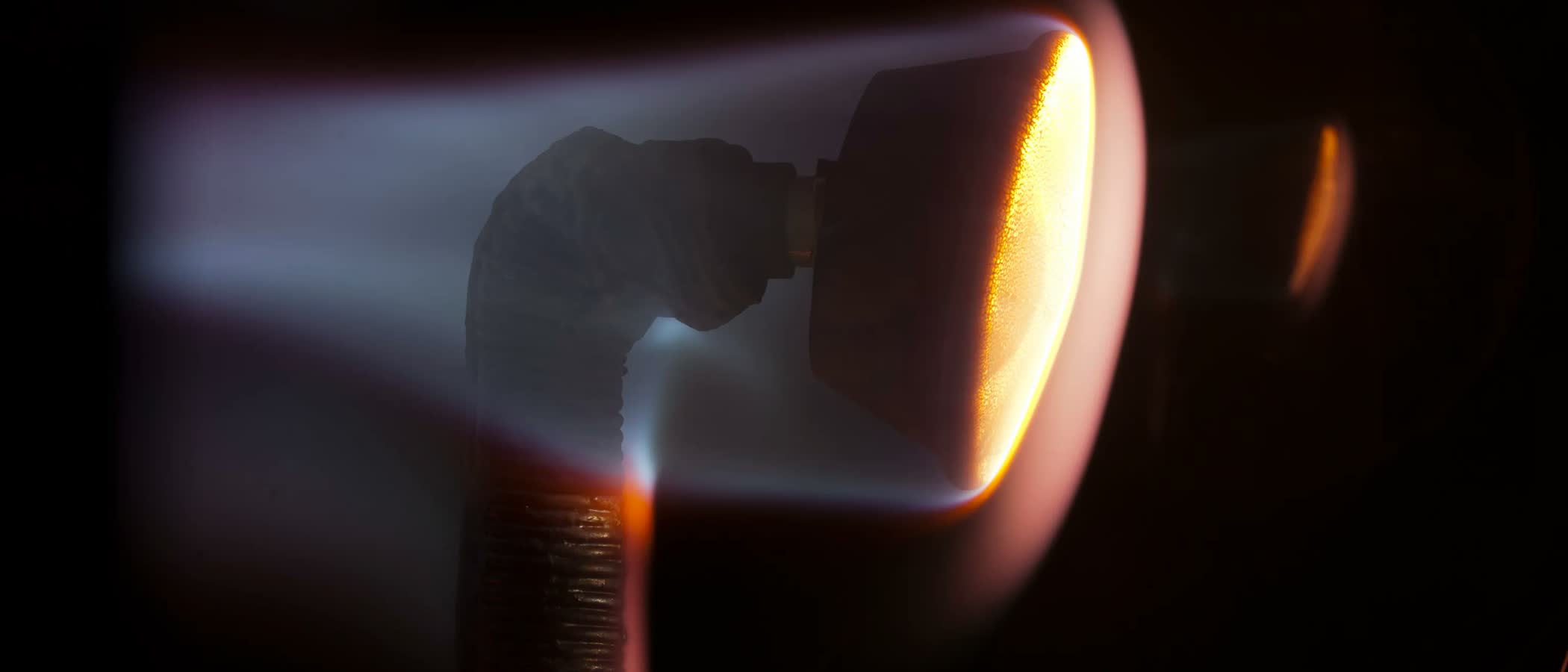
Aerospace and defense
Thermal protection, radomes, and structures that hold under heat and load at once.
That doesn’t mean you have to discover it the hard way.
Mimir discovers and qualifies advanced materials faster, cheaper, and more reliably than traditional R&D.
The next generation of American innovation relies on new polymers, composites, and other material classes that cannot be simulated using existing methods.
Thermal protection, radomes, and structures that hold under heat and load at once.
Thin films, interposers, and packaging with coupled thermal and electrical demands.
Electrodes, separators, and containment for systems that run hot for decades.
For teams actively engaged in materials research.
Mimir's AI plugs into your workflow, cutting literature review time to minutes and reducing failed trials by an order of magnitude.
For teams without materials expertise.
You bring the requirements, we run the discovery. Our material scientists work with your engineering team to deliver a working prototype.
We’ve already helped companies discover new materials and put them into shipping products. A requirement went in, and a working material came out.
A researcher doesn’t simulate a new composite from scratch. They triangulate, reasoning from experiments on materials near the one they want. Mimir does that at scale: a proprietary representation of materials, turned into a space you can search.
Chemistry, structure, architecture and process held in one object.
A candidate is created from the experiments that surround it in vector space.
A negative result rules out more of the design space than a positive result, so failures compound successes.
We discover materials alongside partners, and run materials R&D as a service. They own the materials. We keep the experimental record.
Proactive discovery. The engine finds a material before anyone thinks to ask for it, because it can see where the space is empty.
Vertical integration. Mimir qualifies and delivers the material it discovered, and becomes the supplier of record.
We take on a small number of materials problems at a time. If one of them is holding up your program, we’d like to hear about it.